
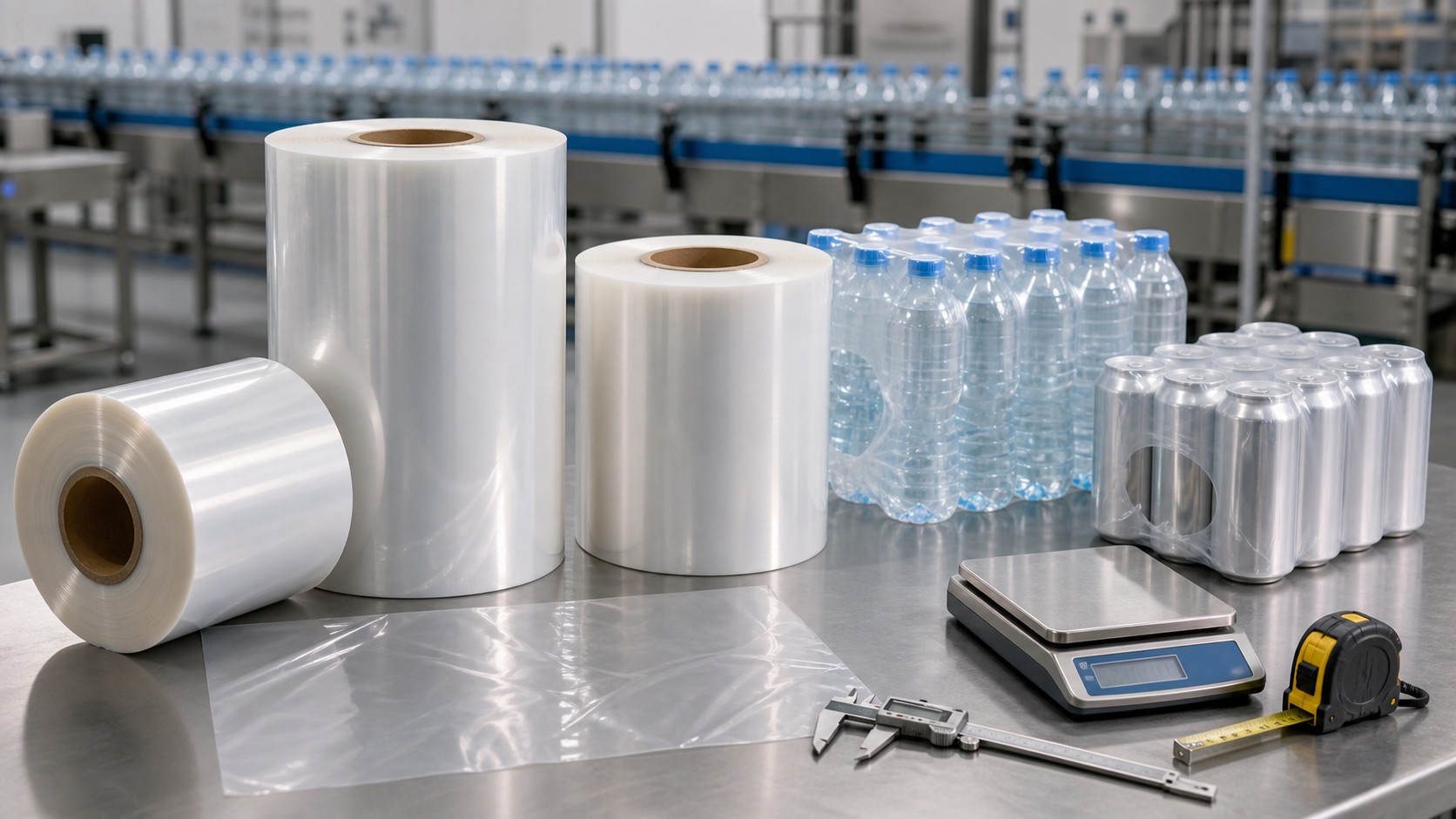
For beverage packaging, shrink film roll specifications directly affect machine performance, packing cost and final package quality. If the roll width, thickness or roll weight is not suitable, the packaging line may face wrinkles, poor sealing, film tearing or unstable multipacks.
Beverage shrink film is usually used on automatic or semi-automatic packaging lines. The film must match both the product and the machine.
Correct roll specifications help improve packaging line stability, sealing strength, shrink appearance, film consumption control, transport protection, production efficiency and final pack consistency.
Most beverage shrink film is made from PE materials, commonly LDPE, LLDPE or blended PE formulations. PE shrink film is suitable for beverage packaging because it offers toughness, strong holding force, reliable sealing, puncture resistance and flexible thickness options.
Film thickness is usually measured in micron. It affects strength, shrink performance and material cost. Light beverage packs may use 35-45 micron, standard bottled water multipacks often use 45-60 micron, heavy drink packs may use 60-80 micron, and long-distance transport or trayless packs may need 80 micron or above.
Film width is one of the most important roll specifications. It must match the pack size and packaging machine. If the film is too narrow, it may stretch excessively or fail to cover the pack properly; if it is too wide, excess film may create wrinkles and increase cost.
To recommend film width, buyers should provide bottle or can diameter, product height, number of units per pack, pack length and width, pack height, tray size if used and required overlap.
Roll weight affects production efficiency and machine loading. A larger roll can reduce roll changes, but it must fit the packaging machine. Buyers should confirm maximum roll diameter, preferred roll weight, core size, film length per roll and loading method.
The cardboard core size must match the machine shaft. A wrong core size can stop production even if the film itself is correct.
Good beverage shrink film should shrink evenly around the pack after passing through the heat tunnel. Buyers should check shrink tightness, wrinkle level, corner appearance, seal stability, film clarity and pack stability after cooling.
Sealing performance is critical for beverage multipacks because the pack is often heavy. The film should seal firmly without burning, splitting or weakening at the seal line.
Beverage shrink film rolls can be clear or printed. Clear PE shrink film is suitable for simple bundling, cost-focused packaging and product visibility. Printed PE shrink film is suitable for branded beverage packs, retail display and promotional packaging.
Before requesting a quotation, buyers should prepare product type, pack format, product dimensions, pack dimensions, target thickness, film width, roll size, core size, film type, machine type and destination country or port.
Wrong roll specifications may lead to wrinkles after shrinking, loose packs, film tearing, poor sealing, excess film waste, roll fitting problems, slow production and printed pattern misalignment.
A beverage shrink film roll is not just a roll of plastic film. It is a production material that must match the product size, pack weight, machine condition and transport requirement.
Zhongchen Shengke supplies PE shrink film, beverage shrink film, printed shrink film and stretch film for bottled water and beverage packaging. Film width, thickness, roll weight, core size, color and printing can be customized according to your product and packaging equipment.